


Context
REDD Huila was developed as a continuation of the Biological Corridor Project, funded by French cooperation, CAM, and Cormagdalena (2002–2007). It serves as an alternative to provide incentives to communities committed to territorial conservation but in need of additional income-generating opportunities.
The project represents a commitment to strengthen territorial management under the premise of reducing deforestation, bringing together public and private entities to finance an investment plan in activities that support this goal:
- technical assistance
- marketing support
- monitoring and governance
- financial incentives linked to the transition toward sustainable production systems
Carbon credits serve as an additional benefit for forest owners and landholders.
Activities carried out
Within the framework of the REDD Huila Project, pilot activities have been implemented to reduce deforestation in the project area, including sustainable production systems (silvopastoral systems, panela production, beekeeping chain, cold-climate fruit crops, and nature-based tourism), the establishment of live fences, eco-efficient stoves, and community-managed rural microcredit revolving funds, as well as governance strengthening, among others.
Additionally, the project seeks to provide payments to forest owners or landholders through the sale of carbon credits in the voluntary market.

726
Number of forest conservation agreements signed with farmers and municipalities

1.5
1.5 million tCO₂e projected net emissions avoided 2014–2044

0,065 %
Deforestation avoided 2014-2020
Project details
The Grouped REDD Huila Biological Corridor Guácharos–Puracé Project, located in the southern part of the department of Huila (Colombia), within the Colombian Massif, aims to reduce 3.2 million tCO₂e over a 30-year period by addressing deforestation and forest degradation. The project is based on a 1% baseline deforestation rate across a potential forest area of 25,292 hectares.
In addition to climate mitigation outcomes, the initiative generates significant environmental and social co-benefits. These include the conservation of biodiversity (such as the Andean bear, páramo tapir, and black oak), the protection of strategic local and regional water resources — notably the headwaters of the Río Magdalena — and the improvement of living conditions for more than 1,100 families in southern Huila.
To date, 726 forest conservation intent agreements covering 13,233 hectares have been signed between forest holders and CORMAGDALENA.
The project operates under a participatory governance framework that ensures equitable decision-making between rural communities and institutional stakeholders. Beneficiary representation is ensured through the Association of Signatories to Forest Conservation Agreements (ASOREDD HUILA), which participates in the Project Governance Steering Committee alongside CORMAGDALENA, the regional environmental authority CAM, and the municipalities of San Agustín, Pitalito, Acevedo, and Palestina.
The project is validated and registered with Verra under ID 1765, in accordance with the VCS (Verified Carbon Standard) and CCB (Climate, Community & Biodiversity) standards. It is currently completing its first verification period (2014–2020) for carbon credit issuance. Revenues generated will support project beneficiaries and co-finance the investment plan aimed at preventing deforestation.

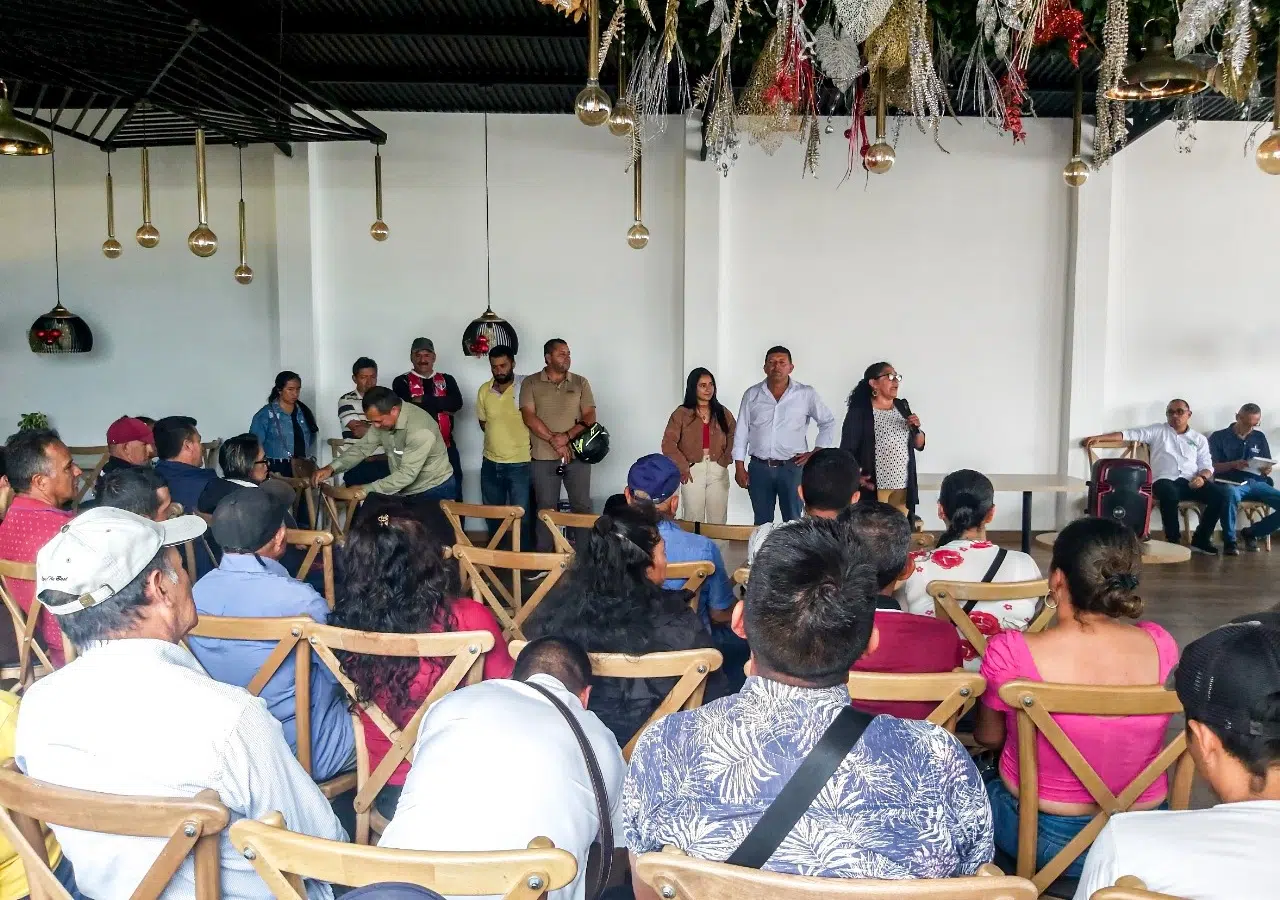
ONF Andina presents the REDD+ Huila project as part of the technical visit for the first verification.

Huella y Fondo beneficiaries. Visit by AENOR as part of the project’s first verification.

Meeting with ASOREDD HUILA as part of the technical visit for the first verification.
Expected results
- Reduction of deforestation and associated GHG emissions.
- Conservation of existing biodiversity.
- Access to financial and technical resources to improve existing production systems and the beneficiaries’ quality of life.
- Strengthening of governance, monitoring, and community-based control.
- Certifications and standards
-
CCBS (Climate, Community & Biodiversity Standards)
VCS (Verified Carbon Standard)
- Budget
- 9.114.096 USD
- Partners
- Regional Autonomous Corporation of the Río Grande de la Magdalena – CORMAGDALENA (project proponent), with the participation of the Regional Autonomous Corporation of the Upper Magdalena (CAM) (environmental authority), ONF Andina (design and implementation), the Government of Huila, the municipalities of San Agustín, Palestina, Pitalito, and Acevedo, and the Association of Forest Conservation Agreement Signatories of the REDD Biological Corridor Project Guácharos - Puracé (ASOREDD HUILA).
- Beneficiaries
- The Association of Forest Conservation Agreement Signatories of the REDD Biological Corridor Project Guácharos - Puracé (ASOREDD HUILA) and the municipalities of San Agustín, Palestina, Pitalito, and Acevedo (territorial entities within the project’s jurisdiction and also signatories of the conservation agreements).
- Donor
- The project has received financial support from the French Global Environment Facility (FFEM), the French Development Agency (AFD), the Regional Autonomous Corporation of the Río Grande de La Magdalena (CORMAGDALENA), ONF International, and the Regional Autonomous Corporation of Alto Magdalena (CAM).
Other projects to discover

South America
Fazenda São Nicolau – Forest Carbon Sink
The Fazenda São Nicolau is an emblematic forest restoration and sustainable management project developed by ONF International in the state of Mato Grosso, Brazil, since 1999.
See the project
South America
Sustainable Forest Territories 'Tefos'
TEFOS 3 improves livelihoods in priority deforestation areas by strengthening sustainable practices, market access, and incentives for forest conservation.
See the project
South America
Commercial Reforestation Project – PRC in the Lower Dry Magdalena region (Colombia)
The forest carbon component of the PRC, the project addresses the environmental and social challenges of the Magdalena basin through commercial reforestation, in complement to livestock farming.
See the project