

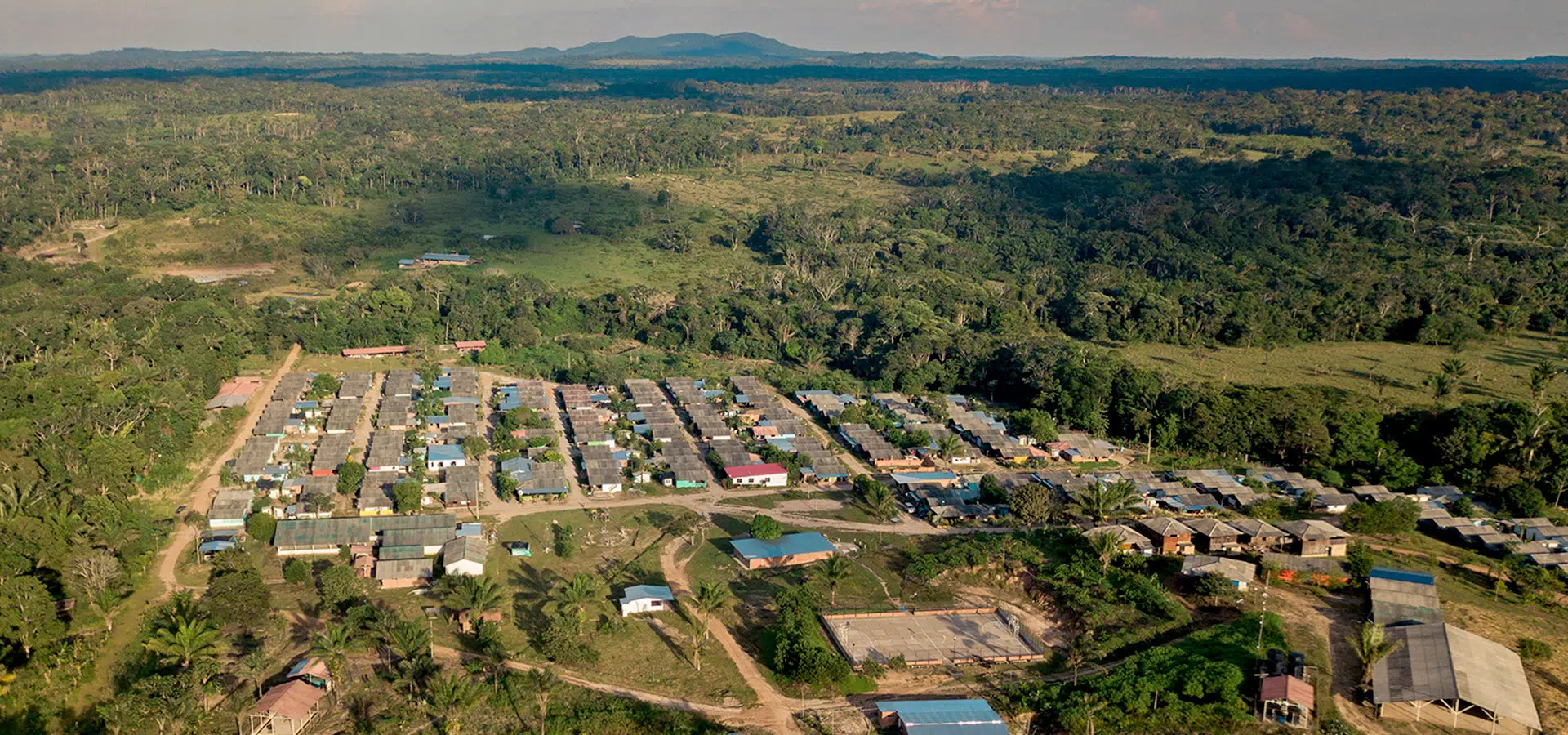
Context
In Guaviare region, the economy was primarily centered on agriculture, livestock, and forestry, while facing historical challenges related to migration, illicit crops, deforestation, and environmental pressure. The department’s soils are generally shallow and low in fertility, suggesting that agroforestry models would be more sustainable than large-scale production. For this reason, Terramaz implemented sustainable production systems, connected to other processes related to territorial and community development.
Typologies:
- Sustainable production systems: Promotes production systems that are sustainable and environmentally compatible, preserving natural resources and the region’s forests.
- Improvement of water quality: Works to improve access to safe water for rural communities.
- Education and training: Implements training and education programs aimed at promoting sustainable development among rural populations.
Activities carried out
- Contribute to integrated rural planning and its implementation, with technological innovation and community participation, within the framework of the PDET Macarena-Guaviare.
- Define and implement production models that are more environmentally and economically efficient, to enable sustainable rural development and curb deforestation.
- Improve living conditions in the rural areas of Guaviare, particularly for the most vulnerable people, to reduce inequalities and consolidate peace in this territory.
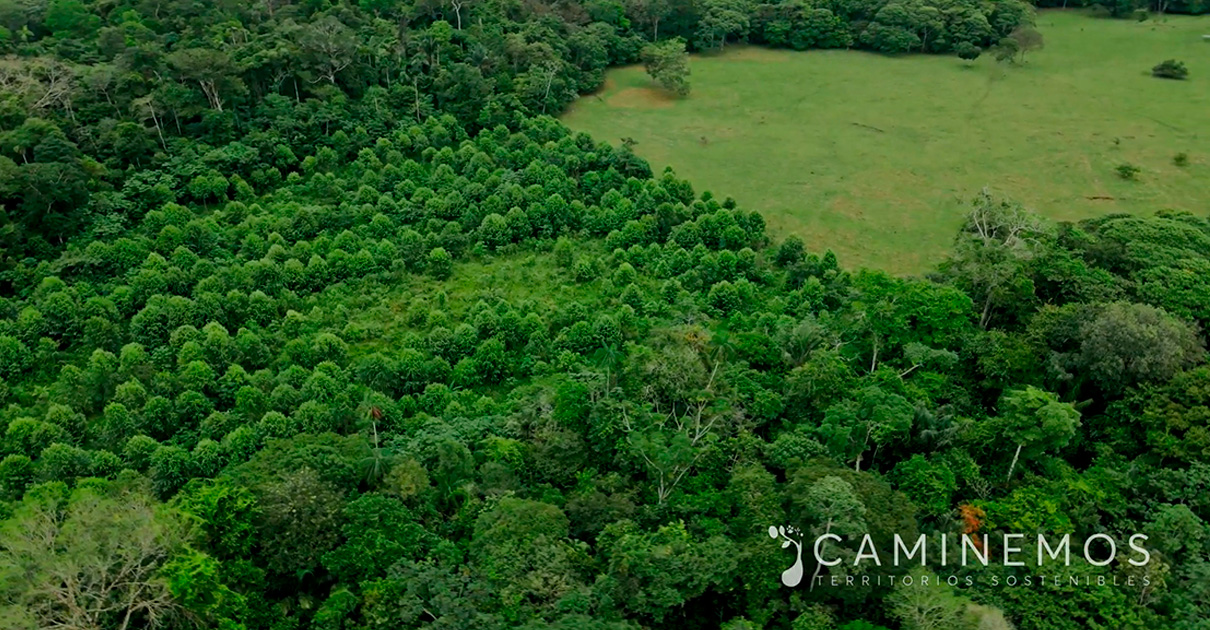

13 191 ha
under conservation agreements

1 401
families have improved their incomes

400
farms with land-use planning

6 292 ha
under sustainable forest management
Project details
- Land-use Planning and Territorial Management: implementation of the Forland land-use and territorial planning tool, creating a regional planning and monitoring platform for territorial development.
- Food Security and Nutrition: strengthening food and nutritional security, with a special focus on the prenatal stage and the first two years of life.
- Economic Development: Implementation of sustainable production systems on farms or community spaces, promoting conservation, restoration, and increased productivity in deforested areas.
- Education and Communication: Improving communication and education for territorial development through the promotion of spaces for reflection and participation of local actors.
- Access to safe drinking water


Expected results
- Functional platform, Departmental Government and CDA able to use it
- 400 farms with land-use planning as the basis for intervention (productive investments, forest management, restoration).
- Zero-deforestation agreements in the farms integrated into the project.
- 200 families with pregnant, breastfeeding women or children under 2 years old receive food supplements (F. Éxito food vouchers).
- Overall malnutrition rate among children under 5 reduced by 1.5 points.
- 400 families capable of producing their own food.
- Organization of 2 farmers’ markets.
- 2000 ha with an approved sustainable forest management plan / community enterprise able to carry out sustainable use.
- Budget
- USD 7.5 millions
- Partners
- ONF International, ONF Andina, Action Against Hunger, Éxito Foundation , Alquería, Government of Guaviare
- Beneficiaries
- Families located in the following villages: El Retorno: Cerritos, Alto Cerritos, Caño Bonito, Santa Bárbara, El Tablazo, Las Colinas, La Reforma, Brisas del Palmar, Retiro de Caño Lajas, San Lucas (priority 1); Jordán Bajo, Jordán Alto, Buenavista, La Vorágine, La Marina, La Esmeralda, Floresta, La Esperanza, Villa Nubia, Alto Potosí (priority 2). Calamar: Río Unilla, Miravalle, Termales, La Primavera, Caño Triunfo, Patio Bonito, San Miguel, La Cristalina, Río Unilla 2, Brisas del Itilla, La Ceiba, Caño Caribe (priority 1); La Tigrera, Puerto Cubarro (priority 2).
- Donor
- European Union - European Fund for Peace
Other projects to discover

South America
TerrAmaz - Amazonian territories
TerrAmaz – Amazonian Territories is a program that supports the development of Amazonian territories.
See the project
South America
TerrAmaz - Amazonian Territories
TerrAmaz - Amazonian Territories is a programme that supports the development of Amazonian territories.
See the project
South America
Fazenda São Nicolau – Forest Carbon Sink
The Fazenda São Nicolau is an emblematic forest restoration and sustainable management project developed by ONF International in the state of Mato Grosso, Brazil, since 1999.
See the project