


Context
The Commercial Reforestation Program (PRC) is a comprehensive development strategy created by the Regional Autonomous Corporation of the Magdalena River – CORMAGDALENA, with technical guidance from ONF International and ONF Andina. Its objective is to address the environmental and social challenges of the Magdalena River Basin by engaging and integrating local communities in forestry activities, as a complement to their traditional livestock production.
With this vision, CORMAGDALENA and ONF International have been implementing the PRC since 2000 through an associative forestry business portfolio based on three key factors:
- The necessary means of production and their ownership,
- the expected integrated benefits, and
- the adaptable implementation strategy to develop the forestry business model.
The goals of the PRC are:
To reduce soil erosion in the Magdalena River Basin and restore soil fertility affected by extensive cattle ranching;
To generate economic benefits for PRC partners through carbon credits (Verified Carbon Credits in the voluntary market) to help combat climate change;
To promote local development through commercial reforestation as a new profitable alternative, labor-intensive and compatible with traditional livestock production;
To demonstrate the environmental, economic, and social sustainability of forestry activities in the region, in order to attract and engage private investors to expand the core of commercial reforestation in the Dry Lower Magdalena area, along with its associated social and environmental benefits.
Activities carried out
- Technical and administrative development to achieve project validation and registration with the UNFCCC and CDM, or with recognized external certification services in the voluntary market.
- Management of the measurement, verification, and certification processes for greenhouse gas (GHG) reductions and/or removals.
- Technical and administrative development of the commercialization and distribution process of verified carbon credits to beneficiaries.
Project details
Estimated quantity of GHG emission reductions or net GHG removals by monitoring and verification periods
First monitoring and verification period:
Area: 3,125 ha
Period: 2000–2011
Net GHG removal: 1,154,956 tons CO₂ eq
Scheme: Clean Development Mechanism (CDM)
Second monitoring and verification period:
Area: 2,673 ha
Period: 2011–2016
Net GHG removal: 1,044,577 tons CO₂ eq
Scheme: Clean Development Mechanism (CDM)
Third monitoring and verification period:
Area: 1,313 ha
Period: 2016–2021
Net GHG removal: 535,231 tons CO₂ eq
Scheme: Voluntary Market, BioCarbon Standard Registry

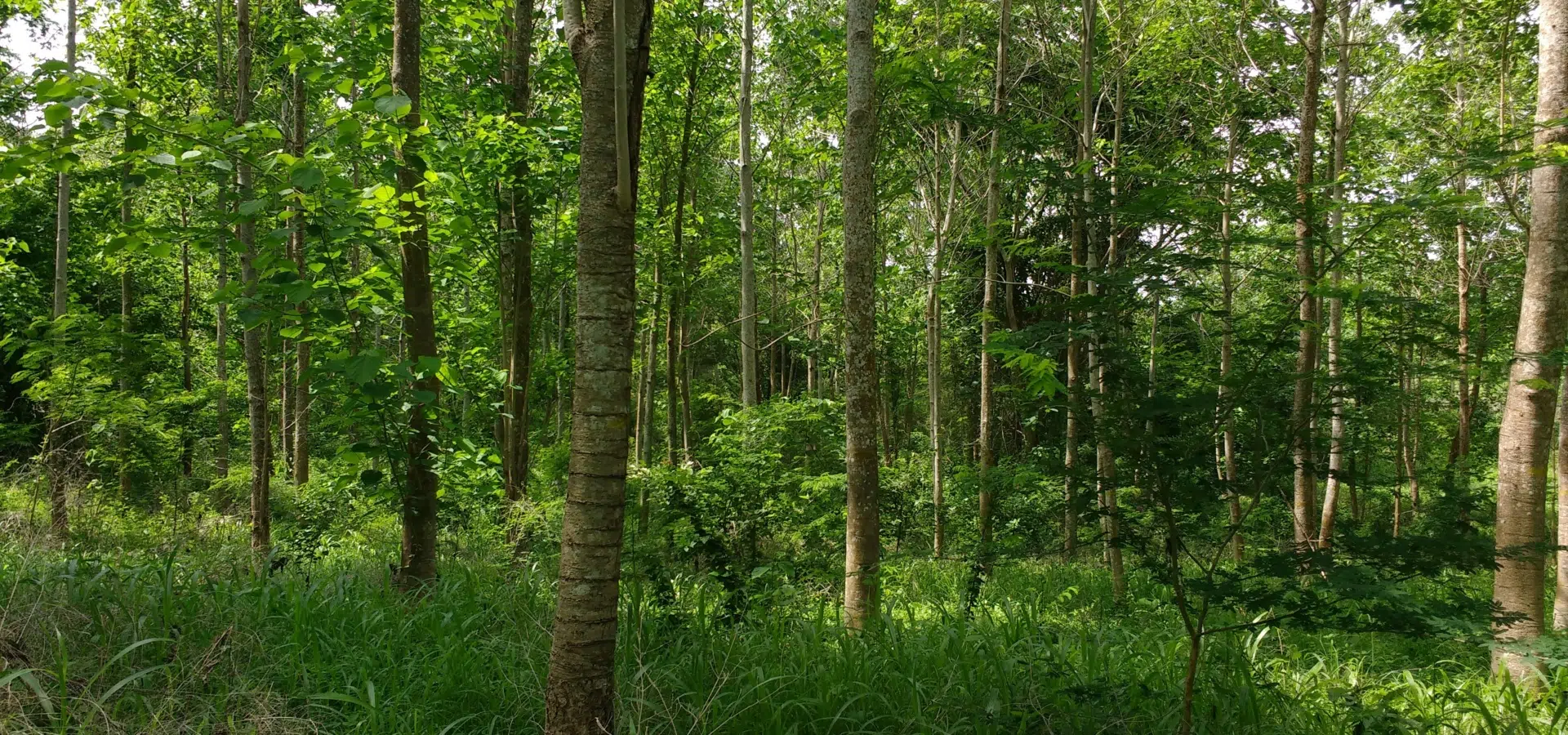
Forest plantations of the PRC project – Magdalena River (Colombia)

The Integrated Development Strategy created by CORMAGDALENA, with technical support from ONF International and ONF Andina, aims to address the environmental and social challenges of the Magdalena River basin through forestry activities, in complement to traditional livestock farming.

Forest plantations of the PRC project – Magdalena River (Colombia)

Forest plantations of the PRC project – Magdalena River (Colombia)
Expected results
-
Generate environmental, social, and economic benefits for society, with an emphasis on combating climate change.
-
Align the project with Sustainable Development Goal No. 13: Take urgent action to combat climate change and its impacts.
-
Prepare and register the Project Design Document (PDD) for Afforestation and Reforestation (A/R) activities with the CDM office of the UNFCCC.
-
Obtain the approved baseline reference and the monitoring methodology applied to the proposed A/R CDM project activity.
-
Carry out the necessary activities for the measurement, verification, and certification of Greenhouse Gas (GHG) reductions and/or removals, as well as the validation of monitoring reports within the accredited period (2000–2029), in accordance with validated certification standards.
- Certifications and standards
- BioCarbon Standard
- Budget
- 860.000 USD
- Partners
- CORMAGDALENA, FINAGRO, A.W Faber Castell & T.H. Reforestation S.A.S
- Beneficiaries
- The associative productive forestry development involves farmers with titled land, whose main activity is cattle ranching, located in the municipalities of the Magdalena Department – Colombia. In addition, investor entities and companies participate, such as the Regional Autonomous Corporation of the Río Grande de la Magdalena (CORMAGDALENA), the Fund for the Financing of the Agricultural Sector (FINAGRO), and companies such as A.W. Faber Castell and T.H. Reforestation S.A.S. Throughout the project, 67 direct beneficiaries have been registered.
- Donor
- ONF International - ONF Andina - CORMAGDALENA - FINAGRO - A.W Faber Castell
Other projects to discover

South America
Fazenda São Nicolau – Forest Carbon Sink
The Fazenda São Nicolau is an emblematic forest restoration and sustainable management project developed by ONF International in the state of Mato Grosso, Brazil, since 1999.
See the project
South America
REDD Huila Project in the Regional Natural Park Guácharos - Puracé Biological Corridor
The REDD Huila project aims to reduce 3.2 million tCO₂e over 30 years while protecting biodiversity and water resources and improving the living conditions of more than 1100 families in Huila-Colombia
See the project
South America
Sustainable Forest Territories 'Tefos'
TEFOS 3 improves livelihoods in priority deforestation areas by strengthening sustainable practices, market access, and incentives for forest conservation.
See the project