

Context
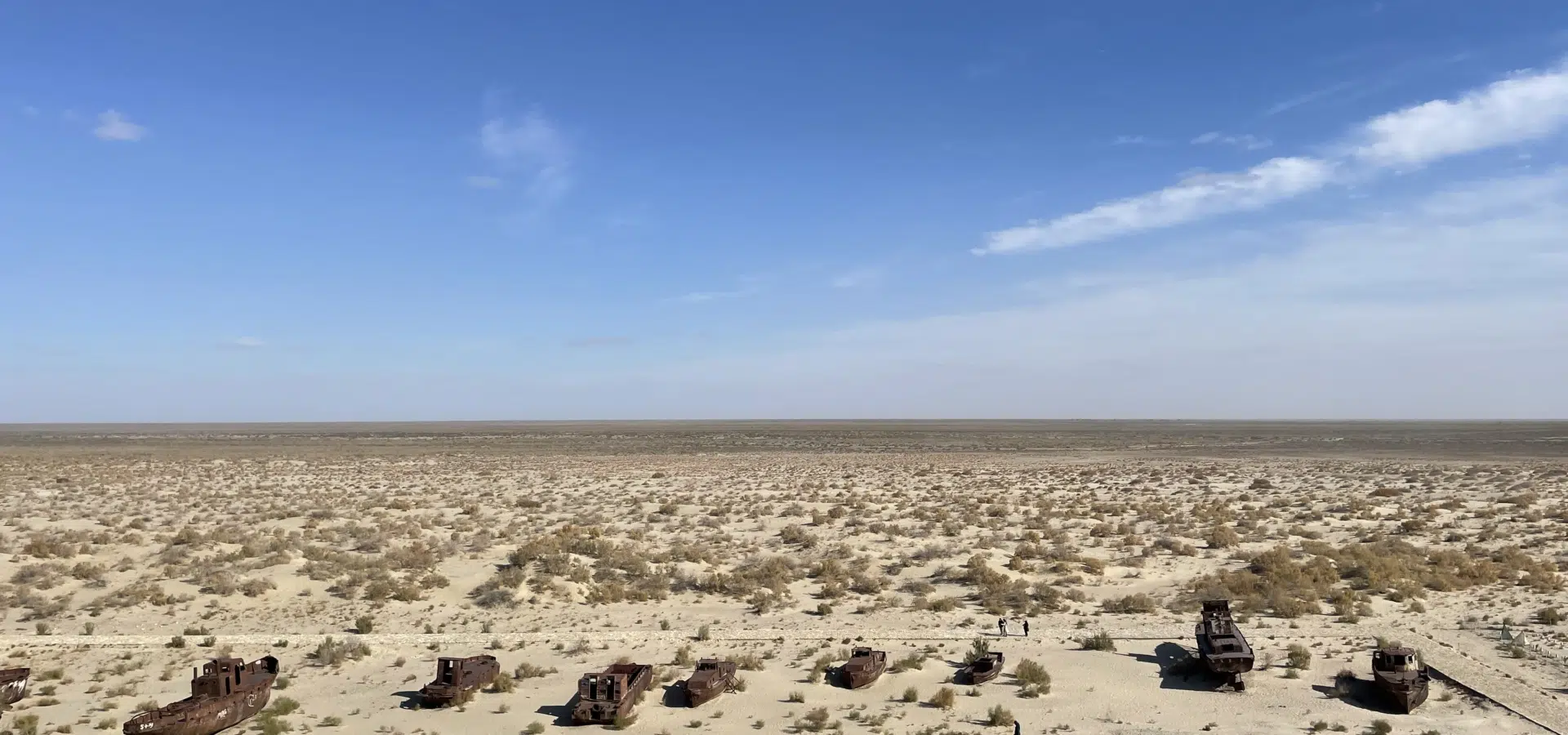
The drying up of the Aral Sea, located between Uzbekistan and Kazakhstan, which was the fourth largest lake in the world until the 1960s, is one of the world’s greatest man-made environmental disasters.
It has affected the livelihoods of millions of people living in the region, the epicentre of which is in the Republic of Karakalpakstan, in north-western Uzbekistan. Intensive and inadequate water resource management has led to a drastic reduction in the area of the Aral Sea, which has shrunk from 67,000 to 4,000 km² in the space of four decades.
The development of large-scale irrigation since the 1940s and 1950s, particularly for cotton production, has led to an increase in the area of salinised soil and rendered part of the land unsuitable for cultivation. The effects on crop yields, while developing a part of the local economy, have led to a deterioration in the living conditions of the local population, particularly in terms of health.
Activities carried out
ONF International, in partnership with AETS Afrique and Rahmanov Partners, an Uzbek engineering firm, conducted a feasibility study, spread over several years, for the rehabilitation of degraded land in the lower Aral Sea basin.
This project, financed by AFD and EIB, aims to improve the living conditions of the inhabitants of Karakalpakstan by restoring and rehabilitating degraded landscapes and revitalising the socio-economic situation in the region. In addition to the environmental challenges of the planned activities, biodiversity conservation and climate change adaptation are being addressed through measures tailored to the local context.
The project in figures
Over 24,000 hectares of degraded land to be restored to combat desertification.

24 000ha
Over 24,000 hectares of degraded land to be restored to combat desertification

4 000ha
Over 4,000 hectares of unproductive land to be rehabilitated, benefiting local communities.

8 Dis.
Several communities involved in planting activities and future harvests
Project details
The intermediate objectives are to limit the transfer of sand and salt to agricultural land and residential areas, reduce soil salinisation, in particular by planting halophytes, and improve soil fertility.
There are also plans to generate income by planting productive trees for non-timber forest products (NTFPs), such as liquorice and rosehip, and fodder species.
A component to strengthen institutional capacities in project management and monitoring and evaluation systems of national institutions and local organisations will also be put in place.

Uzbekistan, Meeting with the management of Leshoz in Nukus

Uzbekistan – Ministerial meeting

Fruits of the Russian olive

Uzbekistan – Field visit

An Uzbek babushka selling her harvest at the local market

Uzbekistan – Saksaoul reforestation plot
Expected results
- A detailed analysis of the territory and needs, serving as a solid basis for strategic decisions.
- A validated environmental and social framework (ESMF), ensuring that all activities comply with international and local standards.
- A relocation plan (RPF), ensuring the protection of the populations concerned.
- An inclusive, integrated approach that promotes the participation of women and young people from local communities (GAP).
- A ready-to-use implementation manual to facilitate the operational launch of the project.
- Budget
- 500 000€
- Partners
- AETS Afrique (Phase 1), Rahmanov Partners (Phase 2)
- Beneficiaries
- The Uzbek Forestry Agency, the Ministry of Ecology, districts in Karakalpakstan including public units responsible for forest management at local level, and the population of Karakalpakstan, particularly local communities involved in the project.
- Donor
- French Development Agency, European Investment Bank, European Union, UNCCD
Other projects to discover

South America
TerrAmaz - Amazonian territories
TerrAmaz – Amazonian Territories is a program that supports the development of Amazonian territories.
See the project
South America
TerrAmaz - Amazonian Territories
TerrAmaz - Amazonian Territories is a programme that supports the development of Amazonian territories.
See the project
South America
Caminemos Territorios Sostenibles - Integrated rural development for peace in Guaviare
The TerrAmaz project works to sustainably improve living conditions in rural areas of the department of Guaviare through integrated territorial management and strengthened essential services.
See the project